

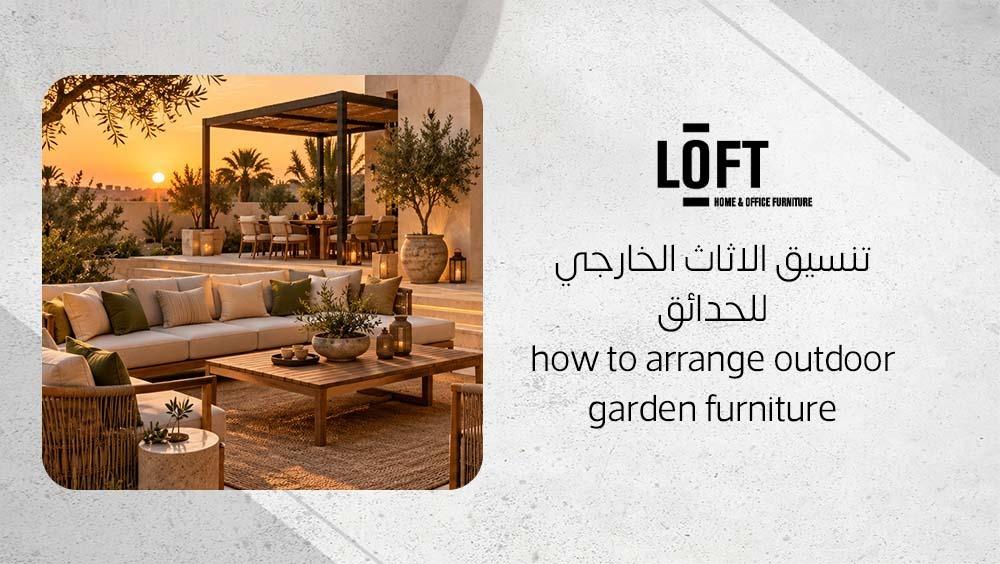
Outdoor garden furniture arrangement begins with measuring the available space and determining the primary purpose of the seating area—whether it is for receiving guests or family gatherings—along with identifying the number of users. Following that comes the step of distributing the furniture to provide comfort, leave clear traffic pathways, and achieve harmony with the plants and the home's exterior façade.
This article takes you on a practical journey to understand how to choose the right layout, appropriate dimensions, and weather-resistant materials, leading to an integrated garden seating area that combines beauty and function. If you are looking for high-quality outdoor furniture with unique designs to suit all tastes, you can explore a diverse collection suitable for furnishing your garden in either a modern or classic style.
Outdoor Garden Furniture Arrangement Starts with Space Planning
Arranging outdoor garden furniture does not start with selecting the pieces, but rather with understanding the space itself and its requirements. Planning the garden seating area in advance saves time and effort, ensuring a balanced distribution between furniture and open spaces.
1. Define the Function of the Garden Seating Area and the Number of Users Before taking any step, determine the primary use of the space: Is it dedicated to relaxation, reading, hosting family and guests, or outdoor dining? Connect the number of seats and types of pieces to this specific use, rather than selecting furniture based solely on its appearance.
2. Measure the Garden and Draw an Initial Layout Accurately measure the length and width of the space, and draw a rough floor plan showing doors, windows, walls, trees, and planter beds, along with electrical sources, lighting, and shaded areas. This layout makes it easier to utilize the garden space practically.
Quick Checklist Before Buying:
- Actual Dimensions: Record the space actually available for furniture, seating, and movement—do not rely on the total area of the garden alone.
- Traffic Pathways: Ensure there are sufficient walkways between pieces to move freely.
- Balance with Nature: Leave room for plants and open spaces; do not turn the entire garden into furniture and accessories.
3. Identify Access Points, Shade Sources, and Lighting Determine access points between the house and the garden, as well as the location of stairs or a pool if present, and avoid placing pieces in access pathways or in front of door openings. Identifying natural shade and light sources helps determine ideal seating spots throughout the day.
Outdoor Furniture Layout Balances Utility and Movement
The success of outdoor garden furniture arrangement depends on a smart layout that balances the seating area with freedom of movement between elements. Choosing the placement of each piece determines how comfortable the garden is to use and how well it harmonizes with the available space.
1. Arranging Seating in Small Spaces In small spaces, it is preferable to select pieces with dimensions proportionate to the available area while minimizing the number of elements so as not to obstruct movement or overpower the green space.
- Dimensions: Choose furniture sized appropriately for the actual garden area.
- Number of Items: Reduce the number of pieces used to avoid overcrowding the space.
- Pathways: Keep the entrance and access pathways to the house clear and unobstructed.
2. Dividing Large Gardens into Zones In a large garden, the space can be organized into independent zones based on usage, allowing better utilization of every part of the garden.
- Conversation Zone: Dedicate a specific seating area for gathering and discussion.
- Open Space: Leave a portion for plants or free movement.
- Connecting Pathway: Maintain a clear walkway connecting the different zones.
Remember that dividing the space is a suggestion tied to the garden's function and dimensions, not a fixed plan suitable for every garden.
3. Directing Seats Around a Clear Focal Point It is recommended to arrange seating to form a cohesive sitting area, oriented either toward a desirable view or around a single central focal point, while considering the locations of doors and drainage outlets so daily movement is not disrupted.
When dealing with a rectangular, square, narrow, or irregularly angled garden, it is best to first identify the usable spaces and access pathways, then test the layout on an initial diagram before physically moving furniture to the site. You can benefit further from outdoor landscaping ideas to gain a clearer vision during execution.
Traffic Pathways Reduce Garden Seating Overcrowding
Planning traffic pathways is an essential part of outdoor garden furniture arrangement, as it determines how easy it is to move between the seating area and the home, while preventing furniture buildup in narrow passages.
1. Keep Walkways and Entrances Clear Verify ease of movement between the house and the seating area before fixing any furniture in place. Avoid placing furniture at transit points or in front of doors and exits, as this hinders daily movement and reduces the comfort of using the outdoor space.
2. Estimate Distances Around Seats and Walkways A guiding distance of 45 to 60 cm can be adopted for movement behind seats or around the seating area, while a primary walkway may require around 90 cm. These are approximate ranges and do not represent a fixed standard; they need adjustment based on piece dimensions, door directions, and the number of users.
Also review door swing paths and chair movement during actual use—evaluating the plan and furniture in a static position alone is not sufficient to judge distance efficiency.
3. Leave Spaces for Water Drainage and Ventilation In locations exposed to rain, avoid placing furniture in a way that traps water underneath or around it. Leave sufficient gaps to allow air circulation and natural water drainage, keeping in mind that this is a planning step and does not guarantee complete prevention of damage.
Discover our range of outdoor furniture specifically designed for gardens and open spaces, featuring modern designs and high-quality materials that meet both practical and aesthetic arrangement needs.
Material Selection Depends on Garden Climate
Arranging outdoor garden furniture fundamentally relies on how compatible the materials used are with the surrounding climate. A piece that looks luxurious may not be suitable for its location if environmental exposure factors are not considered when selecting it.
1. Review Exposure to Sun, Rain, and Humidity Before selecting any piece, site conditions must be accurately evaluated regarding direct sun exposure, rainfall amounts, dust levels, humidity, and salty air in coastal areas. Material suitability is determined not only by its type, but also by the surrounding climate, finish quality, manufacturing precision, and maintenance routine over time.
2. Verify Frame and Finish Materials Among the materials suitable for outdoor use are aluminum, certain coated metals, high-density polyethylene (HDPE), and solid wood when regularly maintained. Merely mentioning a material category does not mean every piece within it withstands the same climatic conditions; therefore, it is preferred to review the specific specifications of the piece before purchasing.
When checking the frame and finish, it is helpful to inquire about the following points:
- Frame Type: Identifying the metal, wood, or material used in constructing the piece.
- Coating and Finish: Verifying coating quality and its weather resistance.
- Suitability for Location: Checking the piece's compatibility with the garden or outdoor space.
- Cleaning and Storage Instructions: Asking about how to care for and maintain the piece.
- Warranty: Reviewing warranty details if available.
3. Inspect Fabrics, Cushions, and Care Instructions Regarding cushions and fabrics used in outdoor furniture arrangement, solution-dyed polyester and olefin fabrics are sometimes used in outdoor cushions. It is important to carefully review fabric, filling, and stitching specifications; fabric resistance does not necessarily mean the filling or zipper is water-resistant.
No piece should be described as waterproof, UV-resistant, or mold-resistant unless explicitly stated in its official specifications.
To explore a selection of outdoor furniture made with high-quality materials and unique designs to suit various garden styles, you can visit the outdoor furniture section directly through the website.
Reviewing Furniture Before Purchase Confirms Suitability
Before completing any purchase, a thorough review of each piece within the outdoor garden furniture arrangement plan is necessary. This review determines how well the furniture matches the space and actual usage, helping you avoid surprises after installation.
1. Match Piece Dimensions with the Floor Plan Compare the dimensions of each piece with the available space in your pre-planned layout to ensure a balanced distribution. Ensure enough room remains for sitting and passing between pieces without blocking any entrance or main walkway in the garden.
2. Check Weight and Access Pathways Ensure the piece is suitable for your flooring type and can be properly installed. Also confirm that the piece can be brought through doors and pathways to its final destination without difficulty. Inquire about the weight of the piece if moving or rearranging it will occur frequently in the future, as well as the availability of replacement parts, care instructions, and warranty when needed.
3. Review Installation, Replacement Parts, and Budget Balance your set budget with the structural quality and joints used in manufacturing the piece, in addition to how easy its surfaces are to clean. Do not assume unannounced specs or features exist; rely only on what is confirmed and explicitly stated prior to making a final purchase decision.
Selected Outdoor Furniture Pieces from Loft
Loft offers a complete range of outdoor furniture specially designed for gardens and open spaces, ensuring every piece combines high-quality materials with unique designs suited for various styles of garden arrangements. Their collection provides everything needed to add a modern character to a garden or patio. Browse the following pieces to start furnishing your outdoor space:
1. COMO OUTDOOR ROCKING CHAIR An outdoor rocking chair designed for relaxation, featured in black with a woven mesh frame, a high backrest, and a seat cushioned in gray. The chair rests on a curved base that allows smooth rocking movement, complemented by functional and comfortable armrests. This outdoor rocking chair is particularly suitable for outdoor spaces and can be added as a distinct piece within a garden or balcony seating arrangement.
2. MUSES OUTDOOR SOFA 2.5 SEATER + TWO ARMCHAIR SET An outdoor sofa set with two armchairs consisting of a 2.5-seater sofa and two armchairs, featuring a dark frame, brown woven sides, and gray fabric seat and back cushions. The separate pieces in this set help arrange the seating area to match the shape of the garden or outdoor courtyard.
- Color: Gray with a dark frame and brown side details.
- Material: Fabric, with woven sides on the sofa and armchairs.
- Sofa Dimensions: 232 × 81.5 × 75 cm.
- Armchair Dimensions (each): 88 × 81 × 75 cm.
- Set Includes: One sofa and two armchairs.
Conclusion
Successful outdoor garden furniture arrangement relies on a set of integrated steps that cannot be overlooked: advance planning, precise space measurement, defining the intended use for every corner, providing clear traffic pathways between pieces, and considering climate conditions before selecting materials and designs. Together, these elements ensure a garden that is both harmonious and practical.